Rwanda and IMF Reach Staff-Level Agreement on $250 Million Program
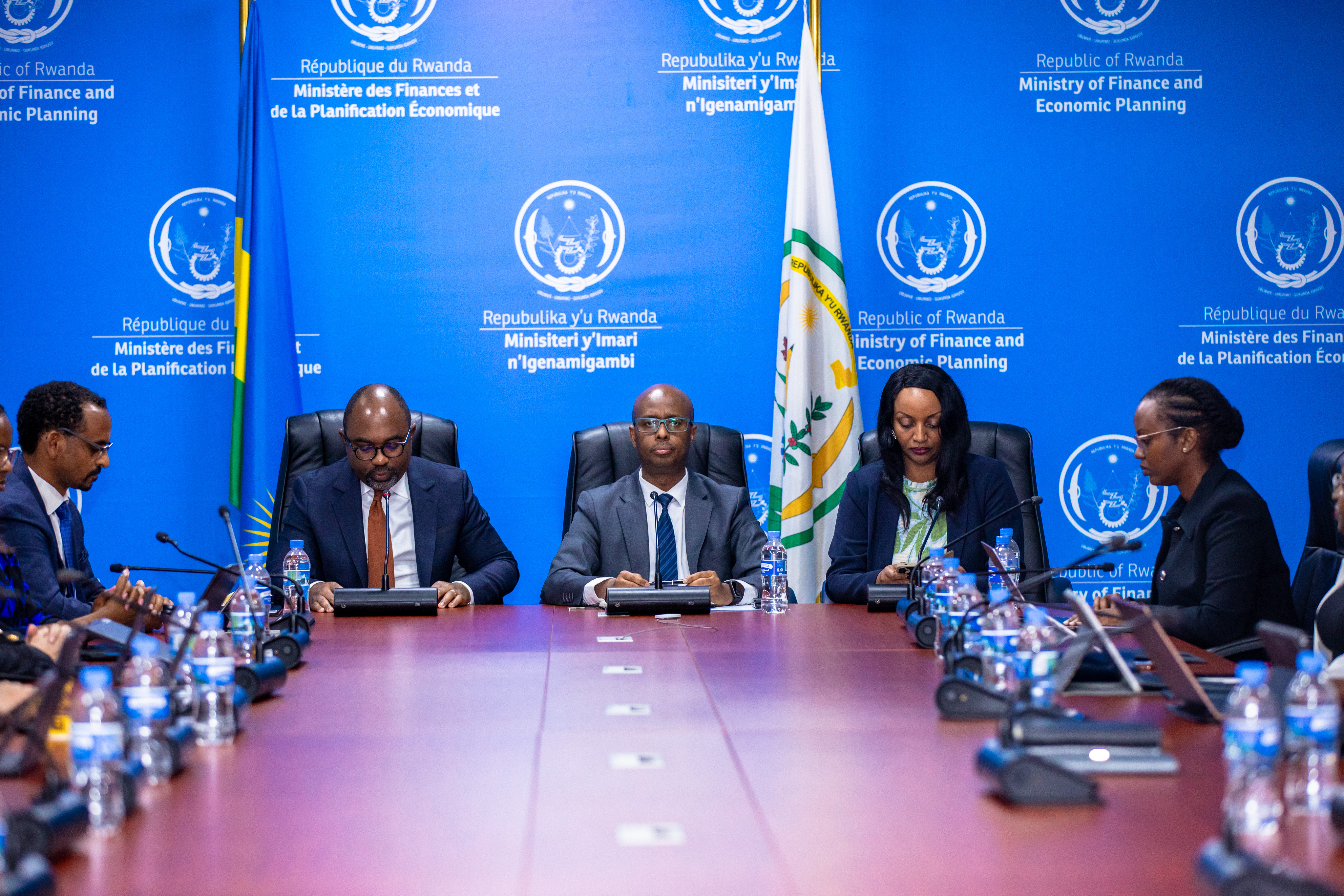
Kigali, Rwanda – April 2, 2026– The Government of Rwanda has reached a staff-level agreement with the International Monetary Fund (IMF) on a 38-month loan program under the Extended Credit Facility (ECF). The agreement is worth SDR 185 million (about $250 million) and will now go to IMF management and its Executive Board for final approval, expected in June 2026.
This agreement will support Rwanda’s efforts to keep up reform momentum, manage the economy prudently, rebuild financial buffers, and address the impact of the war in the Middle East. The program focuses on three main pillars:
Strengthening coherent economic policies
Managing fiscal and debt risks to sustain growth
Promoting private-sector-led growth with transparent oversight of state-owned companies
Yusuf Murangwa, the Minister of Finance and Economic Planning said: "We are pleased with the progress on the ECF program, which will cushion the impact of the Gulf war and declining budget support while sustaining Rwanda's growth, investment ambitions and structural transformation."
Rwanda’s economy grew by 9.4% in 2025, much higher than expected. Inflation rose to 9.2% in February 2026, above the central bank’s target. The external position improved last year thanks to strong exports of coffee and minerals. Imports remained high, especially equipment and materials for local businesses. Foreign exchange reserves stay comfortable, covering over four months of imports. Recent tax reforms have also helped strengthen domestic revenue collection.
The IMF mission chief Albert Touna Mama said: "Rwanda's economy remains resilient with strong 2025 growth, but prolonged war in the Middle East and tighter financing could pressure inflation, external balance, and debt.”
The war in the Middle East is affecting Rwanda’s economic outlook. Growth is expected to slow to 6.8% in 2026. Inflation, budget pressures, and trade deficits persist due to higher global oil and fertilizer prices caused by the war, as well as financing for large strategic investments. Risks include volatile global commodity prices, weak global demand, trade and geopolitical tensions, and tighter global financing. However, sound economic adjustments, Rwanda’s ability to attract private investment, and supportive trade flows offer upside potential.
Repeated shocks, funding needs for priority projects, and a long-term drop in low-cost foreign aid have challenged Rwanda’s efforts to rebuild its financial buffers. Last year’s tax reforms are raising more domestic revenue, but borrowing for strategic projects may increase public debt and debt service obligations.
Under the new ECF program, Rwanda will pursue reforms to support durable private-sector-led growth, maintain economic stability, fix external imbalances, and rebuild policy buffers in a difficult global environment. A credible medium-term budget plan, including the Medium Term Revenue Strategy (MTRS-2), tighter control of foreign-funded capital spending, better risk management, and protecting social and priority spending will help keep debt sustainable.
Given recent inflation pressures, the National Bank will keep monetary policy appropriately tight to bring inflation down to its medium-term target of 5%. Policy will stay proactive, based on data, and forward-looking. Greater exchange rate flexibility, supported by regular price-based auctions, will help Rwanda absorb economic shocks and rebuild international reserves.
The Government of Rwanda appreciates the IMF team’s cooperation and candid discussions. Rwanda remains committed to strengthening its policy foundations and advancing its reform and development agenda.
"The Government remains committed to implementing the reforms under this program to protect Rwandans from external shocks while building a stronger, more self-reliant economy," Minister Murangwa added.
Topics

Rwanda and IMF Reach Agreement on First Review of Extended Credit Facility Program
Kigali, October 6, 2026 — The Government of Rwanda has concluded discussions with the International Monetary Fund (IMF) on the first review of the…
Rwanda Explores Climate Insurance to Protect Miners and Quarry Workers
Mining and quarrying are one of Rwanda's fastest-growing sectors, employing about 92,000 people in 2025. Yet many workers, especially casual and…

Cabinet Approves Rwanda Development Cooperation Policy 2026–2050
Cabinet has approved the Rwanda Development Cooperation Policy (RDCP) 2026–2050, replacing the Aid Policy of 2006 and reflecting the evolving global…

Rwanda Marks World Population Day
Nyagatare, 17 September 2026 —Rwanda marked the 2026 World Population Day in Nyagatare District, bringing together government representatives, young…

Rwanda’s Economy Grows by 9.4% in Q2 2026
Rwanda’s economy remained resilient in the second quarter of 2026, growing by 9.4% supported by strong performance in industry, services and…

Fitch Reaffirms Rwanda’s ‘B+’ Credit Rating with a Stable Outlook
Rwanda’s creditworthiness remains resilient. Fitch Ratings has reaffirmed Rwanda’s Long-Term Foreign-Currency Issuer Default Rating at ‘B+’, with a…

Rwanda Hosts ESAAMLG Annual Meetings to Strengthen Regional Response to Financial Crime
Kigali, 7 September 2026 – Rwanda hosted the 2026 Annual Meeting of the Eastern and Southern Africa Anti-Money Laundering Group (ESAAMLG), bringing…

Rwanda Closes Dual-Currency EUR/JPY Commercial Loan Facility
Kigali August 26, 2026: The Ministry of Finance and Economic Planning of the Republic of Rwanda (B+/B2/B+) announces the successful closing of a…

Rwanda and EIB Sign €65M Deal for Volcanoes Community Resilience
Kigali, 5 August 2026 — The Government of Rwanda, through the Ministry of Finance and Economic Planning (MINECOFIN) and the European Investment Bank…