Fitch Affirms Rwanda at ‘B+’; Outlook Stable
Fitch Ratings on Friday May 4, 2018 affirmed Rwanda’s Long-Term Foreign-Currency Issuer Default Rating (IDR) at ‘B+’ with a Stable Outlook.
Fitch’s review committee said; “The ‘B+’ rating reflects Rwanda’s strong governance and doing business metrics, low public debt/GDP and high growth potential. The rating is weighed down by its low income per capita, persistent and large current account deficits”.
Fitch highlighted the strong governance and doing business metrics, low public debt/GDP and high growth potential and the Political stability and effective governance as key positive rating drivers. But the rating is weighed down by our low income per capita and large current account deficits although external pressures eased in 2017 to result in the current account deficit more than halving to 6.8% of GDP in 2017 from a historical high of 14.3% of GDP in 2016 but forecasts to widen slightly in the medium term, due to Bugesera airport construction driving up capital imports. They said that risks to the rating for Rwanda are related to the need to attract long-term equity capital to finance the large current account deficit so it does not result in a depletion of foreign exchange reserves or rising net external debt.
The main factors that could individually or collectively lead to a positive rating for Rwanda are
; continued strong GDP growth supporting income convergence towards ‘B’ rated peers and marked and sustained narrowing of the current account deficit.
Main assumption by Fitch on the outlook
Fitch assumes Rwanda will continue to implement structural reforms and prudent economic policies with support from the IMF under successor programmes, and assumes that the government will be able to maintain broad social and political stability.
For more information visit https://www.fitchratings.com/site/pr/10029256
Note: A rating expresses the belief that in the short to medium term, a country is capable of settling/servicing its debt without any problem. This belief has based on an assessment of the economic situation as well as the policies of the Government. This tell investors that the risk of investing in the country is low - as they are sure to get back their investment. A good rating usually translates in lower cost of financing (on commercial debt) and, at the same time, when combined to other reforms, means being an attracting destination for investors.
Topics
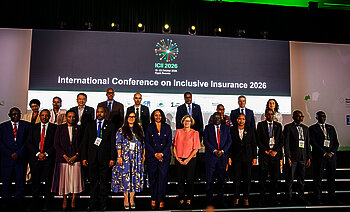
Rwanda Hosts ICII 2026 to Expand Inclusive Insurance and Build Resilience
Rwanda is hosting the International Conference on Inclusive Insurance (ICII) 2026 in Kigali, bringing together leaders from the public and private…

Rwanda and IMF Reach Agreement on First Review of Extended Credit Facility Program
Kigali, October 6, 2026 — The Government of Rwanda has concluded discussions with the International Monetary Fund (IMF) on the first review of the…
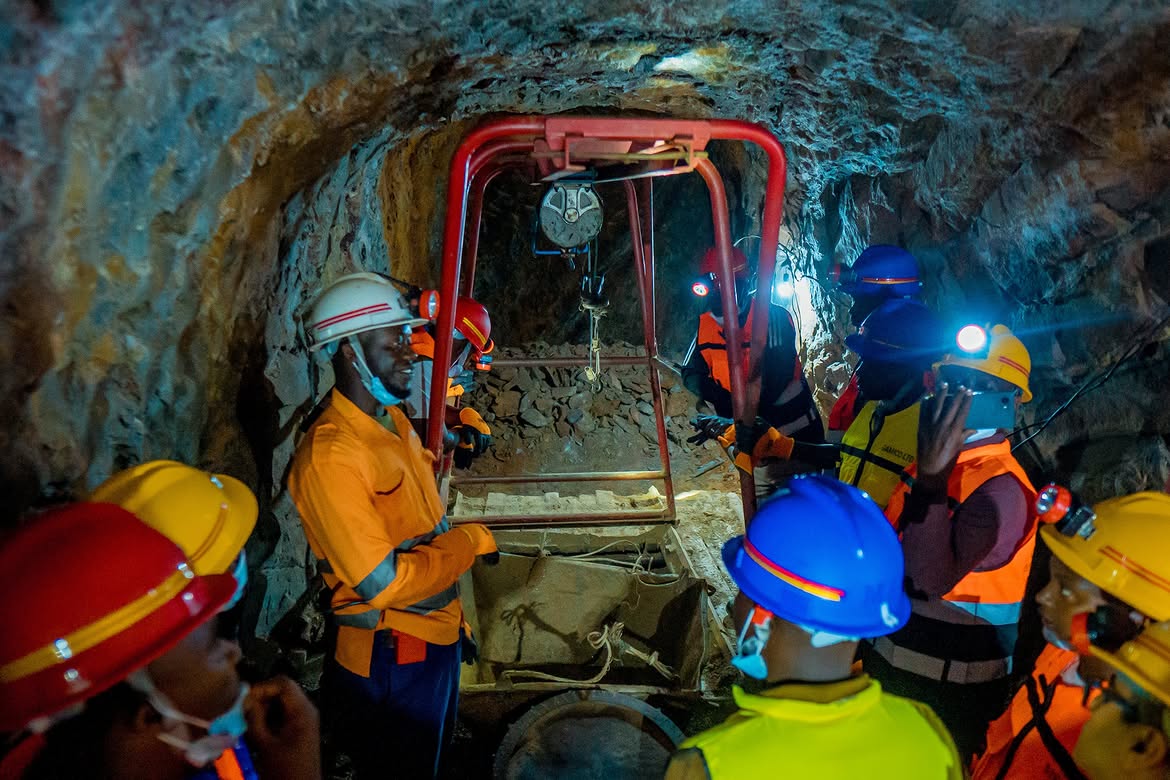
Rwanda Explores Climate Insurance to Protect Miners and Quarry Workers
Mining and quarrying are one of Rwanda's fastest-growing sectors, employing about 92,000 people in 2025. Yet many workers, especially casual and…

Cabinet Approves Rwanda Development Cooperation Policy 2026–2050
Cabinet has approved the Rwanda Development Cooperation Policy (RDCP) 2026–2050, replacing the Aid Policy of 2006 and reflecting the evolving global…

Rwanda Marks World Population Day
Nyagatare, 17 September 2026 —Rwanda marked the 2026 World Population Day in Nyagatare District, bringing together government representatives, young…

Rwanda’s Economy Grows by 9.4% in Q2 2026
Rwanda’s economy remained resilient in the second quarter of 2026, growing by 9.4% supported by strong performance in industry, services and…

Fitch Reaffirms Rwanda’s ‘B+’ Credit Rating with a Stable Outlook
Rwanda’s creditworthiness remains resilient. Fitch Ratings has reaffirmed Rwanda’s Long-Term Foreign-Currency Issuer Default Rating at ‘B+’, with a…

Rwanda Hosts ESAAMLG Annual Meetings to Strengthen Regional Response to Financial Crime
Kigali, 7 September 2026 – Rwanda hosted the 2026 Annual Meeting of the Eastern and Southern Africa Anti-Money Laundering Group (ESAAMLG), bringing…

Rwanda Closes Dual-Currency EUR/JPY Commercial Loan Facility
Kigali August 26, 2026: The Ministry of Finance and Economic Planning of the Republic of Rwanda (B+/B2/B+) announces the successful closing of a…