How Rwanda will benefit by joining International Convention of Tax Matters

Last week, Rwanda signed and ratified the Convention on Mutual Administrative Assistance in Tax Matters (MAAC). MAAC is a multilateral treaty instrument used by countries to exchange information for tax purposes to better enforce their domestic laws. The treaty will enable Rwanda to exchange tax information with 141 countries that are currently signatory to the MAAC and boost co-operation in tax matters with regard to countering international tax evasion and avoidance.
By signing MAAC, Rwanda commits to comply with international standards on tax transparency and exchange of information as observed by the European Union and Organization for Economic Cooperation and Development (OECD).
With only 10 Agreements for Elimination of Double Taxation with respect to Tax on Income and the Prevention of Fiscal Evasion and Avoidance (DTAA) in force, Rwanda has a limited network concerning exchange of tax information and therefore exposed to international tax evasion, possible illicit financial flows and profit shifting. By Signing the MAAC, Rwanda reaffirmed its commitment to fight offshore tax evasion and avoidance by implementing the OECD transparency standards.
The multilateral treaty will enable Rwanda to increase its tax revenue mobilization using different standards. These include all forms of Exchange of Information (EOI), namely exchange of information on request (EOIR), automatic exchange of information (AEOI), spontaneous exchange of information (SEOI) as well as simultaneous tax examinations, and tax examinations abroad, the assistance in recovery of tax claims and the assistance in the service of documents.
Rwanda will access the capacity building and support provided by the Global Forum on Transparency and exchange for tax purposes secretariat to help in implement the standards of EOIR and AEOI as provided for under MAAC. It will also have access to Global Forum rating to attract foreign direct investments, given that a number of international financial institutions incorporate Global Forum ratings into their policies, determining the direction of investments. The move will reaffirm Rwanda’s profile as a reliable location in which to do business.
In a move to boost inbound investment and positioning Rwanda as a financial hub in Africa, Rwanda is putting the framework in place to launch the Kigali International Financial Centre (KIFC). Having a Financial Center as a country, it is prerequisite to comply with international standards. Furthermore, it is important to note that KIFC project will lead to more international financial players in Rwanda and the potential need for exchange of taxpayer information in and outside the country is inevitable. A comprehensive set of legal reforms, regulations and global initiatives are currently supporting the development of KIFC including becoming party to MAAC.
MAAC will provide Rwanda with a robust framework for complying with international standards which is mandatory for success of KIFC. Those standards include but no limited to data safeguard and confidentiality which goes hand in hand with exchange of tax information on request, automatic exchange of financial account information, country by country reporting, and spontaneous exchange on tax ruling. An attractive KIFC requires that a framework on confidentiality and safeguarding of data is implemented, and it requires tax authorities to have information security management arrangements that adhere to international best practice.
By becoming party to the MAAC, Rwanda will secure a conducive environment, which is key for attracting potential investors by offering certainty and assurance to investors regarding the country’s transparency and effort to comply with international standards.
Rwanda is scheduled to be peer reviewed on the exchange of information on request standards in 2023, the outcome or “Rating” by the OECD/GF will send a signal to investors on Rwanda’s position vis a vis to the standards. This will play I huge role in investors decision making especially when deciding where to invest.
Topics
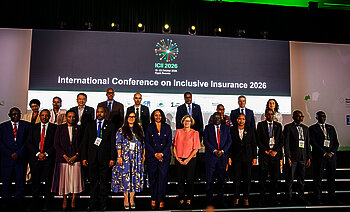
Rwanda Hosts ICII 2026 to Expand Inclusive Insurance and Build Resilience
Rwanda is hosting the International Conference on Inclusive Insurance (ICII) 2026 in Kigali, bringing together leaders from the public and private…

Rwanda and IMF Reach Agreement on First Review of Extended Credit Facility Program
Kigali, October 6, 2026 — The Government of Rwanda has concluded discussions with the International Monetary Fund (IMF) on the first review of the…
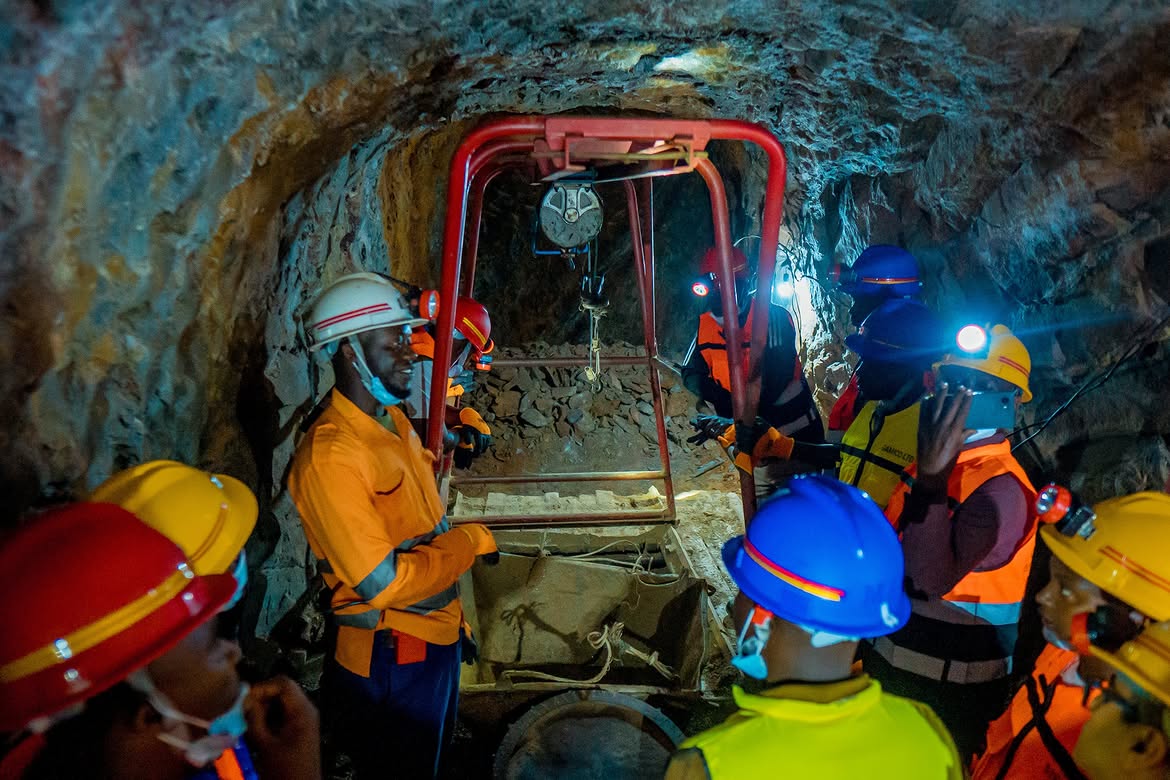
Rwanda Explores Climate Insurance to Protect Miners and Quarry Workers
Mining and quarrying are one of Rwanda's fastest-growing sectors, employing about 92,000 people in 2025. Yet many workers, especially casual and…

Cabinet Approves Rwanda Development Cooperation Policy 2026–2050
Cabinet has approved the Rwanda Development Cooperation Policy (RDCP) 2026–2050, replacing the Aid Policy of 2006 and reflecting the evolving global…

Rwanda Marks World Population Day
Nyagatare, 17 September 2026 —Rwanda marked the 2026 World Population Day in Nyagatare District, bringing together government representatives, young…

Rwanda’s Economy Grows by 9.4% in Q2 2026
Rwanda’s economy remained resilient in the second quarter of 2026, growing by 9.4% supported by strong performance in industry, services and…

Fitch Reaffirms Rwanda’s ‘B+’ Credit Rating with a Stable Outlook
Rwanda’s creditworthiness remains resilient. Fitch Ratings has reaffirmed Rwanda’s Long-Term Foreign-Currency Issuer Default Rating at ‘B+’, with a…

Rwanda Hosts ESAAMLG Annual Meetings to Strengthen Regional Response to Financial Crime
Kigali, 7 September 2026 – Rwanda hosted the 2026 Annual Meeting of the Eastern and Southern Africa Anti-Money Laundering Group (ESAAMLG), bringing…

Rwanda Closes Dual-Currency EUR/JPY Commercial Loan Facility
Kigali August 26, 2026: The Ministry of Finance and Economic Planning of the Republic of Rwanda (B+/B2/B+) announces the successful closing of a…