S&P revises Rwanda’s outlook to Positive; maintains rating at B
Standard and Poor’s (S&P), a corporate and sovereign rating agency has revised Rwanda’s outlook to positive from stable and maintained the rating at “B/B” for long and short-term.
The positive outlook reflects Rwanda's external adjustment policies whose objective is to reduce external financing needs and shore up foreign exchange. It is buoyed by Government balance of payment policies which are expected to deliver higher exports of nontraditional goods, including gemstones, textiles, and agro-processing, while reducing imports through increased domestic production of goods such as cement.
In a statement released by the S&P on Friday, the rating agency said it would look to take a positive rating action if Rwanda’s economic performance is materially stronger than its projections and compared with peers.
The 2015-2016 balance-of-payments shocks forced Rwanda implemented external adjustment policies supported by an 18-month International Monetary Fund (IMF) standby credit facility (SCF) of $204 million. This has partly helped the current account deficit to decrease by more than half to around 7% of GDP in 2017, from almost 16% in 2016.
S&P forecast that the current account balance will gradually decline from 2019, notwithstanding the upcoming import-heavy projects, such as construction of the new Bugesera airport. It anticipates upcoming investment projects, higher exports and consumption will support stronger medium-term growth prospects.
However, S&P long-term rating on Rwanda remains at 'B', reflecting low GDP per capita levels of less than $1,000 and the debt accumulation to fund infrastructure projects. The rating reflects their assessment that the government will keep net debt levels moderate at around 45% of GDP by 2021.
For more information about the rating visit https://www.standardandpoors.com/en_US/web/guest/article/-/view/sourceId/10659900
Topics
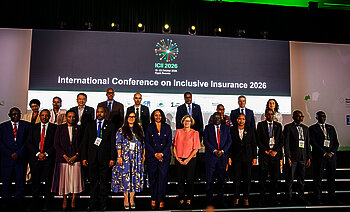
Rwanda Hosts ICII 2026 to Expand Inclusive Insurance and Build Resilience
Rwanda is hosting the International Conference on Inclusive Insurance (ICII) 2026 in Kigali, bringing together leaders from the public and private…

Rwanda and IMF Reach Agreement on First Review of Extended Credit Facility Program
Kigali, October 6, 2026 — The Government of Rwanda has concluded discussions with the International Monetary Fund (IMF) on the first review of the…
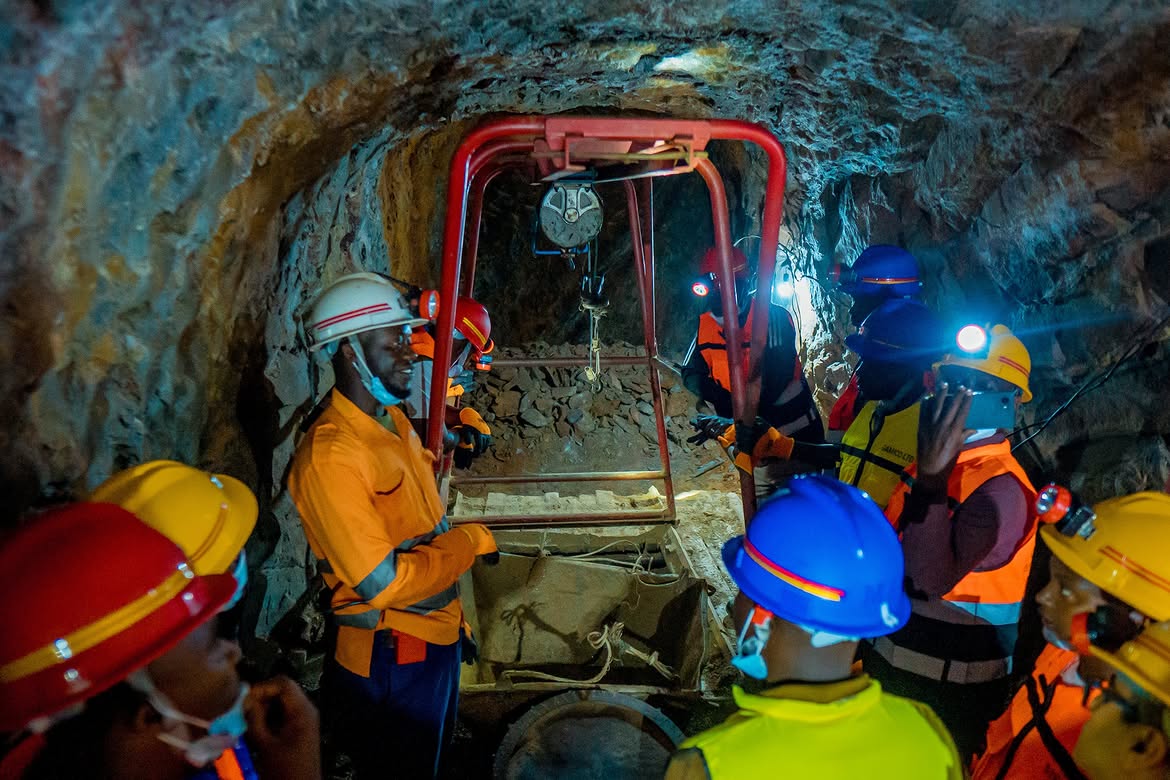
Rwanda Explores Climate Insurance to Protect Miners and Quarry Workers
Mining and quarrying are one of Rwanda's fastest-growing sectors, employing about 92,000 people in 2025. Yet many workers, especially casual and…

Cabinet Approves Rwanda Development Cooperation Policy 2026–2050
Cabinet has approved the Rwanda Development Cooperation Policy (RDCP) 2026–2050, replacing the Aid Policy of 2006 and reflecting the evolving global…

Rwanda Marks World Population Day
Nyagatare, 17 September 2026 —Rwanda marked the 2026 World Population Day in Nyagatare District, bringing together government representatives, young…

Rwanda’s Economy Grows by 9.4% in Q2 2026
Rwanda’s economy remained resilient in the second quarter of 2026, growing by 9.4% supported by strong performance in industry, services and…

Fitch Reaffirms Rwanda’s ‘B+’ Credit Rating with a Stable Outlook
Rwanda’s creditworthiness remains resilient. Fitch Ratings has reaffirmed Rwanda’s Long-Term Foreign-Currency Issuer Default Rating at ‘B+’, with a…

Rwanda Hosts ESAAMLG Annual Meetings to Strengthen Regional Response to Financial Crime
Kigali, 7 September 2026 – Rwanda hosted the 2026 Annual Meeting of the Eastern and Southern Africa Anti-Money Laundering Group (ESAAMLG), bringing…

Rwanda Closes Dual-Currency EUR/JPY Commercial Loan Facility
Kigali August 26, 2026: The Ministry of Finance and Economic Planning of the Republic of Rwanda (B+/B2/B+) announces the successful closing of a…