Government outlines key priorities for new fiscal year budget

April 30, 2019- The Minister of Finance and Economic Planning Dr. Uzziel Ndagijimana presented before the Plenary Session of both chambers of Parliament the Budget Framework Paper (BFP) and the midterm budget estimates for 2019/20-2021/22.
Minister Ndagijimana told Parliamentarians that policies and strategies over the medium term are built on Government’s ambition to raise Rwandans high living standards and reach the upper middle income status by 2035 and high income by 2050.
This is reflected in the blueprint of the Vision 2050 under development. The National Strategy for Transformation (NST1), which has been developed as implementation instrument of the remainder of Vision 2020 and for the first four years of the Vision 2050, provides the direction of the policy objectives over the medium term.
Minister Ndagijimana noted that government will continue to promote import substitution and diversify exports with the aim of reducing the exposure to external shocks and imbalances over the medium term.
“The implementation of Made in Rwanda policy will continue to play a key role in narrowing the current account deficit in the short to long run and help to consolidate private sector domestic activities, create jobs and boost economic growth,” Minister Ndagijimana said.
Key targets and interventions will include growing traditional exports, promoting nontraditional exports, growth of the service sector as well as cross cutting interventions such as promotion of made in Rwanda, developing of cross border and trade logistics infrastructure and development of industrial parks among others.
Proposed 2019-2020 budget
Minister Ndagijimana noted that the budget for the fiscal year 2019/20 will reflect medium term fiscal path which allows for an increased spending to reach the NST1 goals while maintaining public debt at sustainable levels. In this regard, the budget envelope is projected to increase from FRW 2,585.2 billion in revised budget for FY 2018/19 to FRW 2,876.9 billion, in FY 2019/2020 an increase of FRW 291.7 billion and to reach to more than 3,560.5 billion in FY 2021/22.
The proposed total resources estimated for fiscal year 2019/20 is made up of Frw 1,726.2 billion of domestic tax and non-tax revenue, domestic borrowing of Frw 237.6 billion, Frw 6.4 billion from net lending and payments, external grants of Frw 409.8 billion and external loans of Frw 497 billion.
Total tax revenue collections have been projected to reach Frw 1,535.8 billion in the fiscal year 2019/20. This amount will exceed the estimated figure of Frw 1,373.1 billion to be achieved in the fiscal year 2018/19 by Frw 162.7 billion while Non-tax revenue collections to the Treasury have been estimated at Frw 190.4 billion; which is 7.9 billion FRW lower than the projected amount of 198.4 billion FRW in the fiscal year 2018/19.
Total expenditures in the fiscal year 2019/20 is projected at Frw 2,876.9 billion, made up of recurrent expenditure of Frw 1,424.5 billion, Development expenditures of Frw 1,152.1 billion, net lending outlays of Frw 244.1 billion, repayment of arrears amounting to Frw 30.6 billion and accumulation of deposits of Frw 25.5 billion.
After the presentation of the Minister of Finance and Economic Planning, Members of Parliament appreciated the way the economy of Rwanda is remarkably growing comparing to the previous years. They also appreciated how government considered all crucial sectors that need enough budget so that the development of the country can reach in all areas of Rwandans’ life.
The Minister’s presentation indicated that the resources allocation for 2019/2020 and in medium term was guided by the strategic objectives to achieve the transformational goals of NST 1 set out in the three pillars namely: Economic Transformation, Social Transformation and Transformational Governance.
Topics
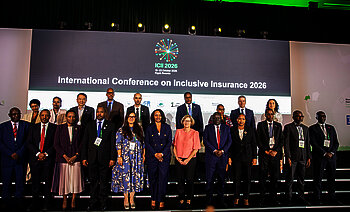
Rwanda Hosts ICII 2026 to Expand Inclusive Insurance and Build Resilience
Rwanda is hosting the International Conference on Inclusive Insurance (ICII) 2026 in Kigali, bringing together leaders from the public and private…

Rwanda and IMF Reach Agreement on First Review of Extended Credit Facility Program
Kigali, October 6, 2026 — The Government of Rwanda has concluded discussions with the International Monetary Fund (IMF) on the first review of the…
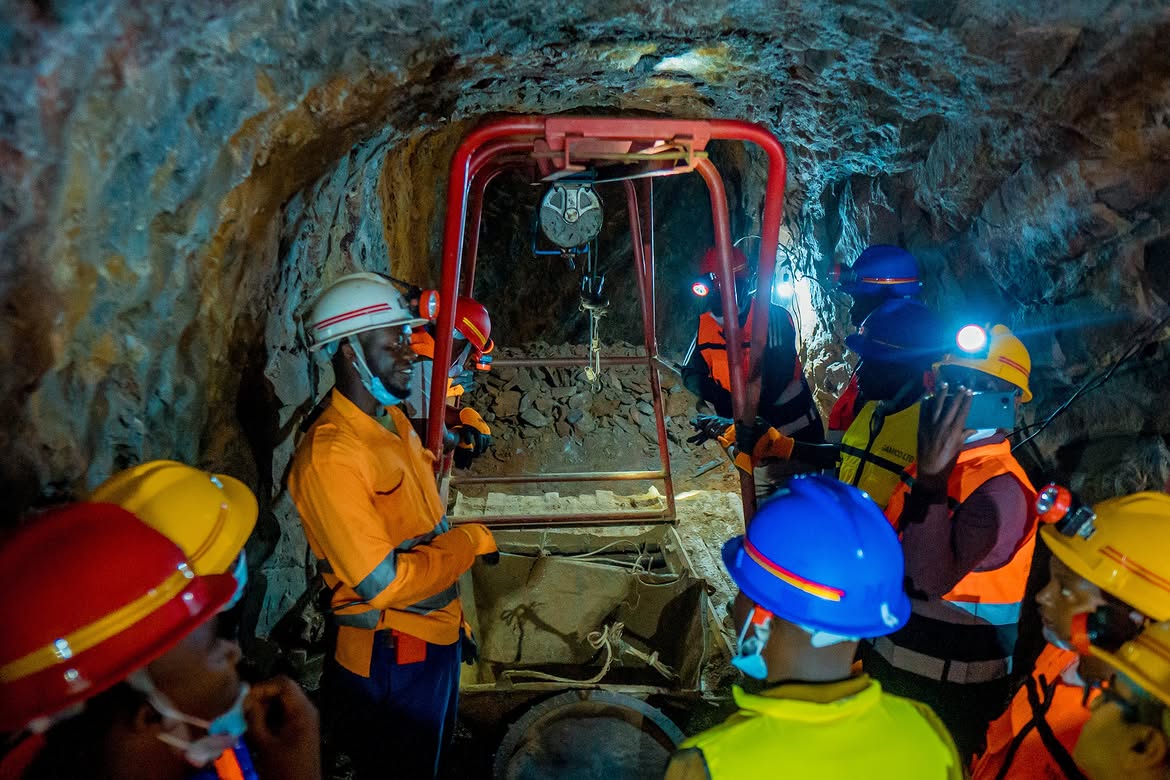
Rwanda Explores Climate Insurance to Protect Miners and Quarry Workers
Mining and quarrying are one of Rwanda's fastest-growing sectors, employing about 92,000 people in 2025. Yet many workers, especially casual and…

Cabinet Approves Rwanda Development Cooperation Policy 2026–2050
Cabinet has approved the Rwanda Development Cooperation Policy (RDCP) 2026–2050, replacing the Aid Policy of 2006 and reflecting the evolving global…

Rwanda Marks World Population Day
Nyagatare, 17 September 2026 —Rwanda marked the 2026 World Population Day in Nyagatare District, bringing together government representatives, young…

Rwanda’s Economy Grows by 9.4% in Q2 2026
Rwanda’s economy remained resilient in the second quarter of 2026, growing by 9.4% supported by strong performance in industry, services and…

Fitch Reaffirms Rwanda’s ‘B+’ Credit Rating with a Stable Outlook
Rwanda’s creditworthiness remains resilient. Fitch Ratings has reaffirmed Rwanda’s Long-Term Foreign-Currency Issuer Default Rating at ‘B+’, with a…

Rwanda Hosts ESAAMLG Annual Meetings to Strengthen Regional Response to Financial Crime
Kigali, 7 September 2026 – Rwanda hosted the 2026 Annual Meeting of the Eastern and Southern Africa Anti-Money Laundering Group (ESAAMLG), bringing…

Rwanda Closes Dual-Currency EUR/JPY Commercial Loan Facility
Kigali August 26, 2026: The Ministry of Finance and Economic Planning of the Republic of Rwanda (B+/B2/B+) announces the successful closing of a…