Government Presents Medium-Term Budget Framework, Focused on Sustainable Growth and Development

Kigali, 8 May 2025 – The Minister of Finance and Economic Planning, Yusuf Murangwa, today on behalf of the Government, presented the Budget Framework Paper (BFP), a medium-term guide outlining Rwanda’s macroeconomic and fiscal policy directions for the period 2025/26 to 2027/28.
Guided by national economic policies over the medium term, the budget for fiscal year 2025/26 will align with the medium-term fiscal consolidation path, supporting the implementation of the National Strategy for Transformation (NST2) goals while maintaining public debt at sustainable levels.
Minister Murangwa highlighted that despite various setbacks, Rwanda’s economy remained resilient, achieving a robust growth rate of 8.9% in 2024—exceeding the previously projected 8.3%. This growth was driven by strong performances in the services and industry sectors, as well as increased food crop production.
“Rwanda’s growth momentum remains strong, despite a challenging environment caused by climate change effects, global inflation, geopolitical tensions, trade wars, among other factors. Our economic recovery has been resilient. The Government remains committed to maintaining macroeconomic stability and fostering inclusive growth by investing in key areas such as agriculture, manufacturing, healthcare, social protection, and education,” Minister Murangwa stated.
Proposed 2025/26 Budget Estimates
The Government plans to allocate Frw 7,032.5 billion for the 2025/26 fiscal year, representing a 21% increase from the Frw 5,816.4 billion approved in the revised budget of FY 2024/25. This increase mainly reflects strategic investments in projects such as the New Kigali International Airport construction, located in Bugesera, and RwandAir expansion, as well as ongoing recovery efforts from crises including COVID-19, inflation, the May 2023 floods, and the Marburg disease outbreak.
Total resources for the 2025/26 fiscal year, comprising domestic revenues of Frw 4,105.2 billion—of which Frw 3,628.0 billion is from tax revenue and Frw 477.2 billion from other revenues—external grants are estimated at Frw 585.2 billion and external loans amounting to Frw 2,151.9 billion.
On the expenditure side, the budget is projected at Frw 7,032.5 billion, including Frw 4,395.1 billion for recurrent spending including salaries, while Frw 2,637.4. will be allocated to capital spending.
Key Priorities
Under NST2, the 2025/26 national budget will prioritize:
- Increasing crop and livestock productivity
- Promoting private investment, job creation and exports
- Accelerating industrialization with focus on manufacturing
- Promoting sports and creative arts
- Expanding generation and access to electricity
- Scaling up access to water, sanitation and decent housing
- Strengthening the transport system
- Leveraging ICT and Innovation to improve service delivery across sectors
- Deepening financial inclusion, literacy and boosting domestic savings
- Enhancing resilience to environment and climate change through mitigation and adaptation
- Ensuring access to quality health and education
- Promoting gender equality and strengthening family cohesion
- Promoting sustainable graduation from poverty and improving nutrition
- Enhancing justice system, public service delivery, citizen participation and engagement
The 2025/26-2027/28 Budget Framework Paper, guided by Vision 2050 and NST2 provides the foundation for the 2025/26 budget, which will be presented in June this year.
Topics
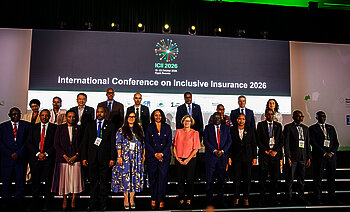
Rwanda Hosts ICII 2026 to Expand Inclusive Insurance and Build Resilience
Rwanda is hosting the International Conference on Inclusive Insurance (ICII) 2026 in Kigali, bringing together leaders from the public and private…

Rwanda and IMF Reach Agreement on First Review of Extended Credit Facility Program
Kigali, October 6, 2026 — The Government of Rwanda has concluded discussions with the International Monetary Fund (IMF) on the first review of the…
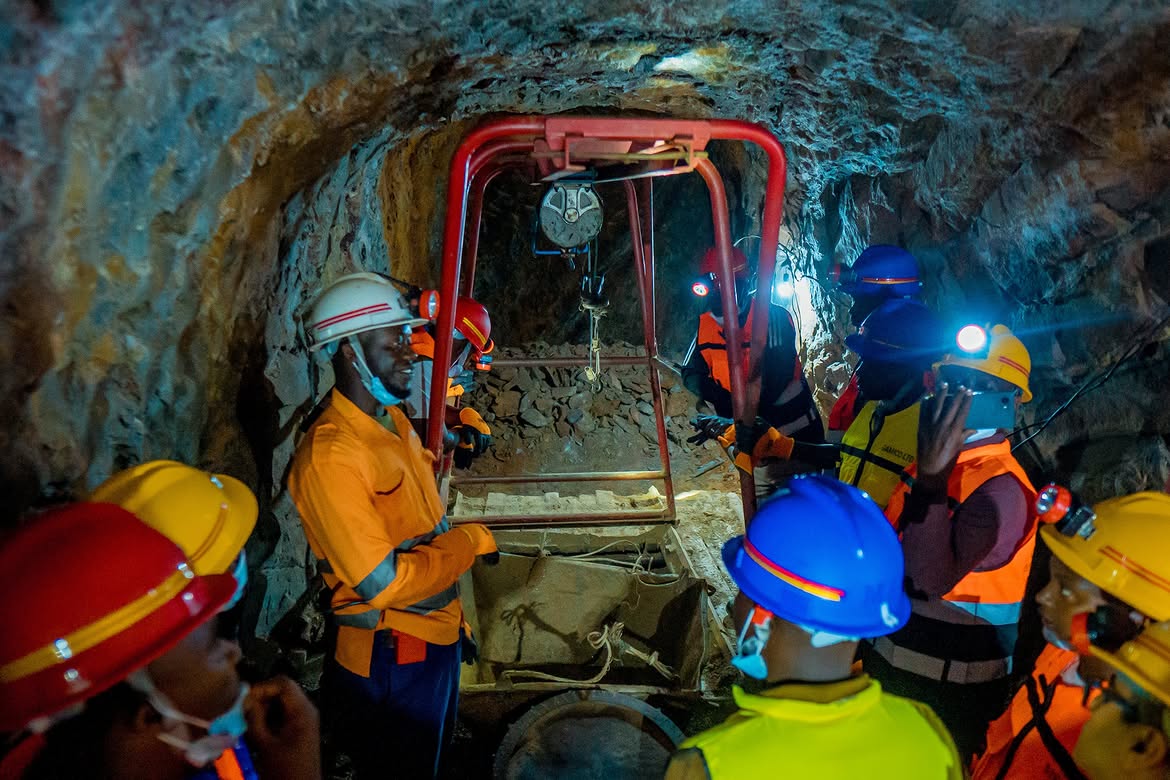
Rwanda Explores Climate Insurance to Protect Miners and Quarry Workers
Mining and quarrying are one of Rwanda's fastest-growing sectors, employing about 92,000 people in 2025. Yet many workers, especially casual and…

Cabinet Approves Rwanda Development Cooperation Policy 2026–2050
Cabinet has approved the Rwanda Development Cooperation Policy (RDCP) 2026–2050, replacing the Aid Policy of 2006 and reflecting the evolving global…

Rwanda Marks World Population Day
Nyagatare, 17 September 2026 —Rwanda marked the 2026 World Population Day in Nyagatare District, bringing together government representatives, young…

Rwanda’s Economy Grows by 9.4% in Q2 2026
Rwanda’s economy remained resilient in the second quarter of 2026, growing by 9.4% supported by strong performance in industry, services and…

Fitch Reaffirms Rwanda’s ‘B+’ Credit Rating with a Stable Outlook
Rwanda’s creditworthiness remains resilient. Fitch Ratings has reaffirmed Rwanda’s Long-Term Foreign-Currency Issuer Default Rating at ‘B+’, with a…

Rwanda Hosts ESAAMLG Annual Meetings to Strengthen Regional Response to Financial Crime
Kigali, 7 September 2026 – Rwanda hosted the 2026 Annual Meeting of the Eastern and Southern Africa Anti-Money Laundering Group (ESAAMLG), bringing…

Rwanda Closes Dual-Currency EUR/JPY Commercial Loan Facility
Kigali August 26, 2026: The Ministry of Finance and Economic Planning of the Republic of Rwanda (B+/B2/B+) announces the successful closing of a…