Rwandans encouraged to save for a better future
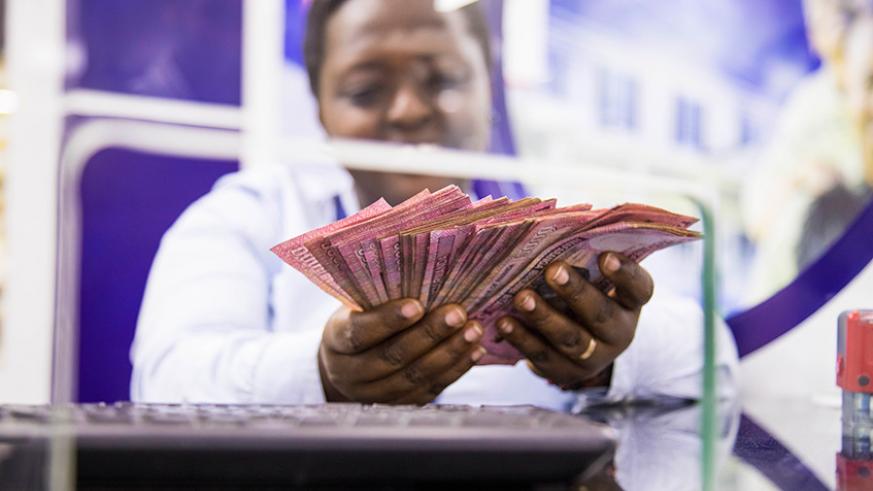
As part of the World Savings Day celebrations, the Ministry of Finance and Economic planning in collaboration with stakeholders has commenced a Savings Week awareness campaign under the theme “Save for a better future”, which is aimed at sensitizing Rwandans on the importance of saving and how to exercise money management decisions that best fit the circumstances of one's life.
Key activities planned over the week include media talk-shows where experts in the field of finance, insurance as well as capital markets will impart wisdom on the importance of saving, the available saving opportunities and platforms and how it can be done.
Since 2009, the government adopted savings mobilization strategy with a target of increasing the level of savings in the country to a rate of 20% of GDP by 2020.
The Minister of Finance and Economic Planning Dr. Uzziel Ndagijimana pointed out that embracing the culture of savings is the only sure way Rwandans can safeguard their financial future, that of their families and also contribute to sustainable economic growth the country needs to attain.
“There has been improvements in terms of savings however, it is not enough. We need to save more. We need to understand that it is through increased savings required to spur investments, have access to low credit interest rates, reduce poverty and contribute to our dignity as a self-sufficient nation,” Minister Uzziel said.
According to the 2016 FinScope survey, about 86% of adults in Rwanda (roughly 5.1 million individuals) save. The rise in number of savers is due to increase in formal savings which rose to 49% from 26% in 2012. However, the banking institutions showed a slight decline from 14% in 2012 to 13% 2016. The uptake in formal savings is driven by savings at Umurenge SACCOs (27%) and mobile money savings at 17%.
To augment this progress, government adopted different initiatives aimed at promoting savings saving culture, these include: The establishment of Ejo Heza, a long term saving scheme that adopts targets salaried and non-salaried workers; Umurenge SACCOs, Iterambere fund, integration of financial education into school curriculum as well as several savings initiatives offered by banks, Microfinance institutions and insurance companies, among others. These initiatives are expected to improve the savings culture in Rwanda.
According to statistics, total savings are still below 15% of GDP compared to the target of 20% of GDP by 2020. The latest Finscope survey also indicated that lack of sufficient financial institution contribute to poor savings culture. Its latest report points out that 35% of adults still to save at home due to inconvenience and or inaccessibility to formal financial institutions.
There are concerted efforts from all stakeholders including government, private sector and civil society to entrench saving culture in Rwanda. We need to pull informal savers into financial institutions and ensure that they do not save to pay for living expenses but move on to invest and create wealth,” Minister Ndagijimana noted.
Vision 2020 seeks to transform Rwanda into a middle-income country by 2020 and recently adopted National Strategy for Transformation and Vision 2050 with aim of turning Rwanda into upper middle income country by 2035 and high income country by 2050. For this to be achieved, it requires that saving ratio to GDP increases significantly.
Topics
Rwanda Hosts ICII 2026 to Expand Inclusive Insurance and Build Resilience
Rwanda is hosting the International Conference on Inclusive Insurance (ICII) 2026 in Kigali, bringing together leaders from the public and private…

Rwanda and IMF Reach Agreement on First Review of Extended Credit Facility Program
Kigali, October 6, 2026 — The Government of Rwanda has concluded discussions with the International Monetary Fund (IMF) on the first review of the…
Rwanda Explores Climate Insurance to Protect Miners and Quarry Workers
Mining and quarrying are one of Rwanda's fastest-growing sectors, employing about 92,000 people in 2025. Yet many workers, especially casual and…

Cabinet Approves Rwanda Development Cooperation Policy 2026–2050
Cabinet has approved the Rwanda Development Cooperation Policy (RDCP) 2026–2050, replacing the Aid Policy of 2006 and reflecting the evolving global…

Rwanda Marks World Population Day
Nyagatare, 17 September 2026 —Rwanda marked the 2026 World Population Day in Nyagatare District, bringing together government representatives, young…

Rwanda’s Economy Grows by 9.4% in Q2 2026
Rwanda’s economy remained resilient in the second quarter of 2026, growing by 9.4% supported by strong performance in industry, services and…

Fitch Reaffirms Rwanda’s ‘B+’ Credit Rating with a Stable Outlook
Rwanda’s creditworthiness remains resilient. Fitch Ratings has reaffirmed Rwanda’s Long-Term Foreign-Currency Issuer Default Rating at ‘B+’, with a…

Rwanda Hosts ESAAMLG Annual Meetings to Strengthen Regional Response to Financial Crime
Kigali, 7 September 2026 – Rwanda hosted the 2026 Annual Meeting of the Eastern and Southern Africa Anti-Money Laundering Group (ESAAMLG), bringing…

Rwanda Closes Dual-Currency EUR/JPY Commercial Loan Facility
Kigali August 26, 2026: The Ministry of Finance and Economic Planning of the Republic of Rwanda (B+/B2/B+) announces the successful closing of a…