Rwanda’s Economic Activity Outpaced Expectations-IMF
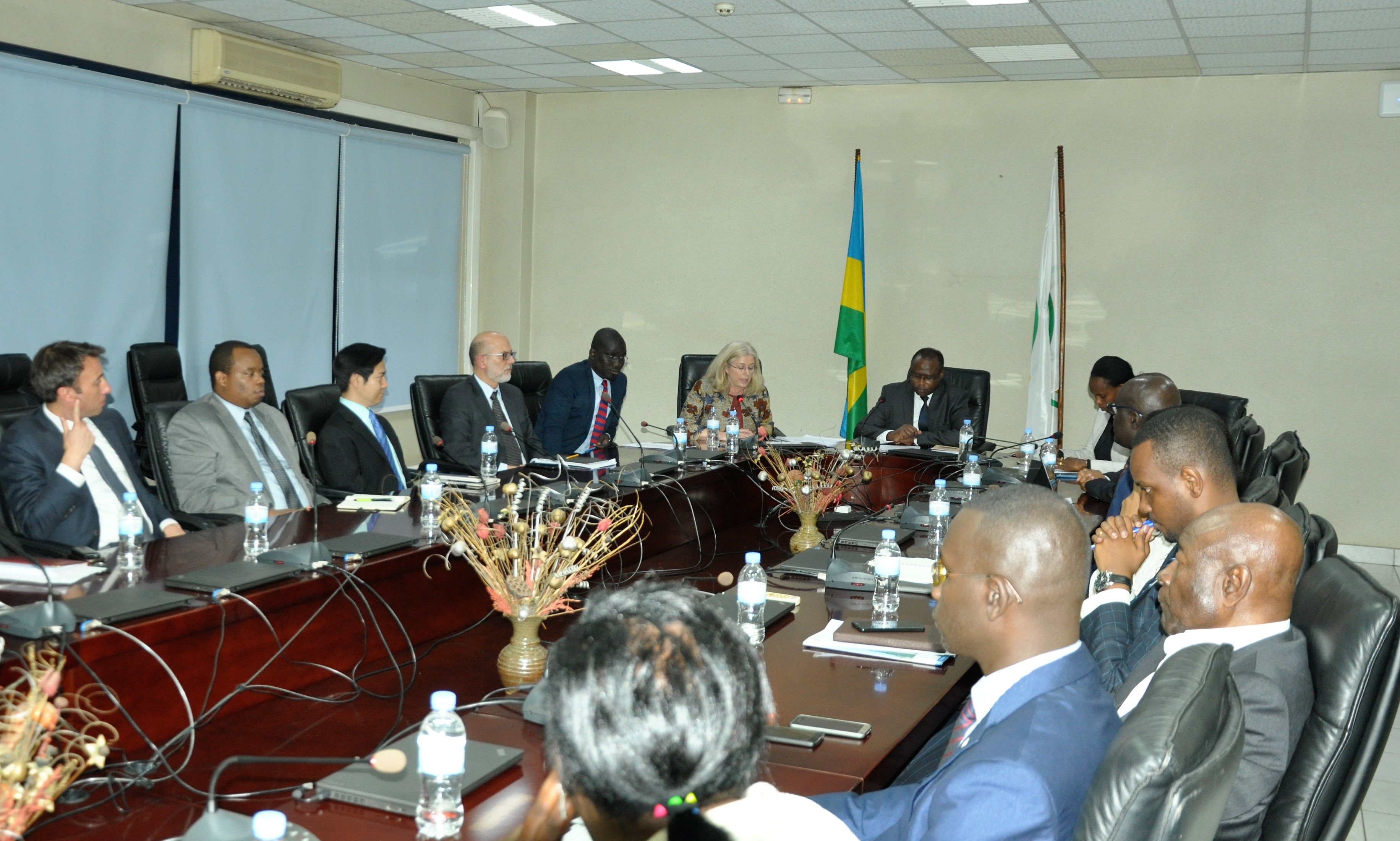
The IMF team led by Laure Redifer noted that Rwanda’s economic activity outpaced expectations in the first half of 2019, with real GDP growing by 10.3 percent, based on a pronounced increase in construction and services activity. that uptick in construction reflects both public infrastructure projects and private investment. Ms. Redifer noted that growth is projected to remain strong, at around 8 percent, over the next 2-3 years. Inflation picked up in recent months, as expected, partly reflecting stronger domestic demand. This was supported by the decision of the Monetary Policy Committee’s (MPC) of the National Bank of Rwanda’s (BNR) to lower interest rates in May. Inflation came back within the central bank’s targeted band in August and is forecast to continue to trend upward towards the target midpoint of 5 percent. Thus, the MPC has chosen to leave its policy rate unchanged for the time being. The IMF team pointed out that the 2018/19 fiscal deficit was higher than expected, due to the timing of budget support disbursements, as well as accelerated execution of externally financed projects compared to the past. External current account widened, as expected, reflecting stronger demand and more capital goods imports needed for construction. At the same time, prices for traditional exports dropped, largely offsetting increases in the volume of exports, particularly within the EAC region. The Rwandan franc remains well in line with economic fundamentals. “Performance in implementation of Rwanda’s program with the IMF has remained satisfactory, with most program targets met. The new program, supported by the IMF’s Policy Coordination Instrument (PCI), was approved by the IMF Executive Board in June 2019. The program aims to support implementation of the National Strategy for Transformation (NST1) via four main pillars: (i) creating budget space for NST1 implementation while preserving fiscal and debt sustainability; (ii) improving fiscal transparency, including the identification and management of potential government liabilities (“fiscal risks”); (iii) regaining momentum on domestic revenue mobilization; and (iv) supporting implementation of the BNR’s forward-looking monetary policy framework that uses interest rates to control policy impulses,” a statement from the IMF team read in part. Looking forward, policy discussions focused largely on how the government budget should accommodate the size and pace of additional spending on NST1 investments in a wide array of sectors, including education, health and infrastructure. Better tracking of public sector assets and liabilities and associated risks should provide more space for priority spending, as should ongoing reforms to maximize collection of domestic revenues. The use of technology, schemes to attract private investment via de-risking, and strategic investment should serve to leverage public resources for greater impact.
Topics
Rwanda Hosts ICII 2026 to Expand Inclusive Insurance and Build Resilience
Rwanda is hosting the International Conference on Inclusive Insurance (ICII) 2026 in Kigali, bringing together leaders from the public and private…

Rwanda and IMF Reach Agreement on First Review of Extended Credit Facility Program
Kigali, October 6, 2026 — The Government of Rwanda has concluded discussions with the International Monetary Fund (IMF) on the first review of the…
Rwanda Explores Climate Insurance to Protect Miners and Quarry Workers
Mining and quarrying are one of Rwanda's fastest-growing sectors, employing about 92,000 people in 2025. Yet many workers, especially casual and…

Cabinet Approves Rwanda Development Cooperation Policy 2026–2050
Cabinet has approved the Rwanda Development Cooperation Policy (RDCP) 2026–2050, replacing the Aid Policy of 2006 and reflecting the evolving global…

Rwanda Marks World Population Day
Nyagatare, 17 September 2026 —Rwanda marked the 2026 World Population Day in Nyagatare District, bringing together government representatives, young…

Rwanda’s Economy Grows by 9.4% in Q2 2026
Rwanda’s economy remained resilient in the second quarter of 2026, growing by 9.4% supported by strong performance in industry, services and…

Fitch Reaffirms Rwanda’s ‘B+’ Credit Rating with a Stable Outlook
Rwanda’s creditworthiness remains resilient. Fitch Ratings has reaffirmed Rwanda’s Long-Term Foreign-Currency Issuer Default Rating at ‘B+’, with a…

Rwanda Hosts ESAAMLG Annual Meetings to Strengthen Regional Response to Financial Crime
Kigali, 7 September 2026 – Rwanda hosted the 2026 Annual Meeting of the Eastern and Southern Africa Anti-Money Laundering Group (ESAAMLG), bringing…

Rwanda Closes Dual-Currency EUR/JPY Commercial Loan Facility
Kigali August 26, 2026: The Ministry of Finance and Economic Planning of the Republic of Rwanda (B+/B2/B+) announces the successful closing of a…