S&P Global Ratings Affirms Rwanda’s ‘B+’ Credit Rating with a Stable Outlook
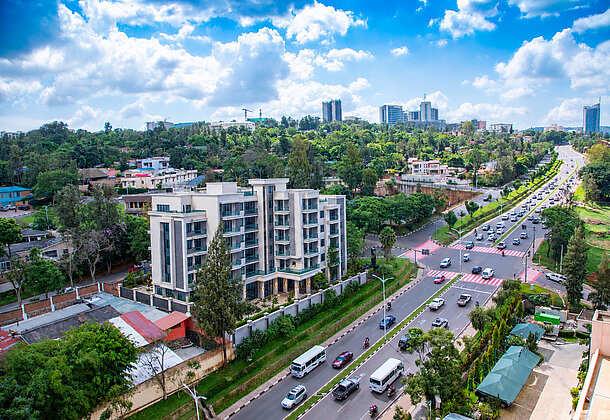
Rwanda’s credit profile remains resilient. In its latest report on Rwanda, published on 16 November 2026, S&P Global Ratings kept the country’s long-term credit ratings for borrowing in foreign and local currency at ‘B+’ with a Stable Outlook. S&P says this reflects Rwanda’s strong growth, smaller budget gaps and continued access to low-cost concessional financing.
S&P points to the Government’s strong record of balanced economic growth and sound financial management. It also notes that Rwanda’s debt structure compares well with that of similar countries: just over 87% of foreign debt is low-interest and long-term. S&P adds the rating extra credit for this strength.
The economy grew by 10% year on year in the first half of 2026, led by manufacturing and services, after 9.3% growth in 2025. S&P expects growth of 7.5% in 2026 and around 7% a year over 2027–2029, faster than in similarly rated countries. Construction of the New Kigali International Airport (NKIA) is a key driver, with full commercial operations planned for mid-2028.
S&P expects the fiscal deficit for 2025/26 to be about 4.9% of GDP, against a planned 5.7%. Tax collections were above budget, and spending was below budget thanks to cheaper financing for the New Kigali International Airport. That financing was supported through the World Bank Group Guarantees Platform, which combined which combined an IDA policy-based guarantee with a MIGA guarantee.. Rwanda is the first country to use this structure, and it cut 2026 spending on Phase II of the airport by Frw 168.2 billion. Rwanda also met all targets in the first review of its 38-month IMF loan program, and the first payment was released in October.
Rwanda’s foreign-currency safety net remains solid. Money sent home by Rwandans abroad rose 31.1% year on year in the first half of 2026, and mineral exports grew strongly. Together, these narrowed the external deficit to 10.9% of GDP, from 13.4% a year earlier. The Rwandan franc has stayed broadly stable, and S&P expects usable foreign-currency reserves to average about USD 2.3 billion over 2026–2029.
S&P recognizes that the conflict in the Middle East has raised fuel, fertilizer and food prices. The government has responded with targeted diesel and fertilizer subsidies, and the National Bank of Rwanda has tightened credit conditions. S&P expects inflation to ease to 8% in 2027.
The government remains committed to sound economic governance, prudent debt management and reducing budget gaps as it advances Rwanda’s development ambitions.
Topics

Rwanda Calls for Financing Readiness and Greater Domestic Financing at Bonds, Loans & ESG Africa 2026
Rwanda is hosting the Bonds, Loans & ESG Africa 2026 conference, bringing together governments, financial institutions, investors, development finance…
Planning and Budgeting Officials Undergo 3-Week Workshop on FY 2027/28 Planning and Budgeting Cycle
Central and local government planning and budgeting officials have begun a three-week workshop on the planning and budgeting cycle for Fiscal Year…
Rwanda Hosts ICII 2026 to Expand Inclusive Insurance and Build Resilience
Rwanda is hosting the International Conference on Inclusive Insurance (ICII) 2026 in Kigali, bringing together leaders from the public and private…

Rwanda and IMF Reach Agreement on First Review of Extended Credit Facility Program
Kigali, October 6, 2026 — The Government of Rwanda has concluded discussions with the International Monetary Fund (IMF) on the first review of the…
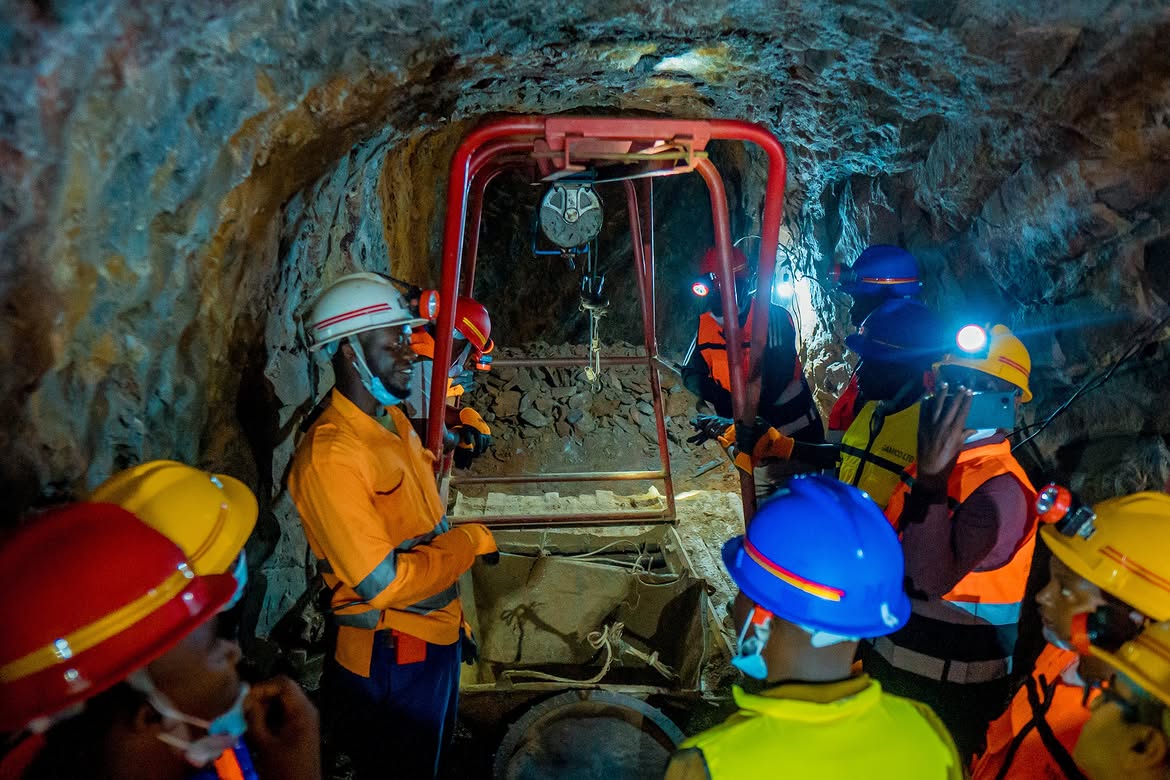
Rwanda Explores Climate Insurance to Protect Miners and Quarry Workers
Mining and quarrying are one of Rwanda's fastest-growing sectors, employing about 92,000 people in 2025. Yet many workers, especially casual and…

Cabinet Approves Rwanda Development Cooperation Policy 2026–2050
Cabinet has approved the Rwanda Development Cooperation Policy (RDCP) 2026–2050, replacing the Aid Policy of 2006 and reflecting the evolving global…

Rwanda Marks World Population Day
Nyagatare, 17 September 2026 —Rwanda marked the 2026 World Population Day in Nyagatare District, bringing together government representatives, young…

Rwanda’s Economy Grows by 9.4% in Q2 2026
Rwanda’s economy remained resilient in the second quarter of 2026, growing by 9.4% supported by strong performance in industry, services and…

Fitch Reaffirms Rwanda’s ‘B+’ Credit Rating with a Stable Outlook
Rwanda’s creditworthiness remains resilient. Fitch Ratings has reaffirmed Rwanda’s Long-Term Foreign-Currency Issuer Default Rating at ‘B+’, with a…